
For millions of seniors and individuals with limited mobility, home represents more than just a place to live—it’s the foundation of independence, dignity, and quality of life. Yet the very environment that feels most familiar can gradually become filled with hidden obstacles as our physical abilities change. A bathroom threshold that once seemed insignificant can transform into a daily challenge, while poor lighting or cluttered pathways may increase the risk of dangerous falls.
Home adaptation isn’t about transforming your space into a clinical environment. Rather, it’s about making thoughtful, often subtle modifications that preserve comfort and personal style while significantly enhancing safety and accessibility. Whether you’re planning ahead for aging in place, supporting an elderly family member, or addressing current mobility limitations, understanding the full spectrum of adaptation options empowers you to create a home that truly supports your needs.
The desire to remain in one’s own home as we age is nearly universal, yet statistics reveal a sobering reality: falls are the leading cause of injury among seniors, and most of these accidents occur at home. The physical and psychological impact of a serious fall can cascade into loss of confidence, reduced activity, and ultimately, premature loss of independence.
Beyond fall prevention, thoughtful home adaptations address the full spectrum of age-related changes. Vision naturally deteriorates, making proper lighting and color contrast essential for navigating spaces safely. Hearing changes may require acoustic adjustments to reduce confusing echoes or amplify important sounds like doorbells and alarms. Reduced grip strength affects our ability to turn doorknobs, open cabinets, or operate traditional light switches—all everyday tasks that adaptive modifications can simplify.
The economic argument is equally compelling. The cost of comprehensive home modifications typically represents a fraction of long-term assisted living expenses, making adaptation a financially sound investment in continued autonomy. Moreover, many modifications increase overall property value while making spaces more comfortable for residents of all ages and abilities.
Falls account for the vast majority of home injuries among older adults, but the encouraging news is that most fall risks can be dramatically reduced through strategic environmental modifications. Prioritizing these changes creates an immediate, measurable improvement in daily safety.
Bathrooms present the highest concentration of fall risks in any home due to wet surfaces, tight spaces, and the physical demands of bathing. Grab bars strategically placed near toilets, inside showers, and alongside bathtubs provide crucial stability during transfers and movements. Modern grab bars come in diverse finishes and styles that complement rather than compromise aesthetic preferences.
Walk-in showers with zero-threshold or minimal-threshold entry eliminate the need to step over tub walls—a common stumbling point. Non-slip flooring, both inside the shower and throughout the bathroom, provides essential traction even when wet. Shower seats or transfer benches allow bathing while seated, reducing fatigue and instability risk for those with limited standing endurance.
For renters or those hesitant to make permanent structural changes, an impressive array of damage-free installation options exists. Suction-cup grab bars with medical-grade adhesion provide reliable support without drilling, while tension-mounted poles create floor-to-ceiling stability points. These solutions respect property restrictions while delivering genuine safety benefits, and they can be easily relocated or removed when circumstances change.
Adhesive-backed safety treads for stairs, temporary threshold ramps, and pressure-mounted gates all exemplify how modern adaptive technology balances effectiveness with reversibility—an especially important consideration for analyzing cost versus benefit when making adaptation decisions.
Flooring choices dramatically impact fall risk. High-pile carpeting, while soft, can catch mobility aids and shuffle-walking gaits, while overly slick hard surfaces become treacherous when wet. Medium-pile, low-loop carpet or textured vinyl provides an ideal balance of traction and easy navigation for walkers or wheelchairs.
Securing loose rugs with non-slip backing, eliminating decorative floor obstacles, and ensuring smooth transitions between different flooring types all contribute to safer navigation. For challenging substrates like tile or hardwood, strategic application of clear anti-slip coating preserves appearance while improving safety.
Beyond fall prevention, true accessibility means removing barriers that limit free movement throughout the home. These modifications expand usable space and reduce the physical effort required for daily activities.
Standard doorways often prove too narrow for wheelchairs, walkers, or simply for safe passage when balance is uncertain. Widening key doorways to a minimum of 32 inches of clear passage—ideally 36 inches—accommodates assistive devices while creating a more spacious, open feel that benefits everyone. Offset hinges can add precious inches without structural changes, while removing unnecessary doors entirely creates seamless flow between frequently used areas.
Hallway and pathway width should allow comfortable turning radius for mobility aids. The strategic repositioning or removal of furniture creates clear circulation paths that reduce collision risks and navigation stress, contributing to both physical safety and psychological comfort in one’s living environment.
Even minor elevation changes pose significant obstacles for wheelchairs and walkers. Exterior ramps with proper slope ratios (typically 1:12 for wheelchair accessibility) and non-slip surfaces enable independent entry and exit. Threshold ramps—available in portable, semi-permanent, and permanent installations—eliminate the small but crucial barriers between rooms or at exterior doors.
For multi-level homes, stair lifts or vertical platform lifts restore access to previously unreachable areas, though these represent more substantial investments requiring professional installation and ongoing maintenance considerations.
Age-related vision changes demand more light for the same visibility, while glare sensitivity increases simultaneously. Layered lighting strategies address both needs: bright, even general illumination eliminates dark corners and shadows, while task lighting focuses additional brightness on specific work areas like kitchen counters or reading chairs.
The Color Rendering Index (CRI) of light bulbs affects how accurately we perceive colors and details—particularly important for medication management and noticing potential hazards. LED bulbs with CRI values above 90 provide excellent color accuracy while consuming minimal energy. Adjustable color temperature systems allow customization, with cooler (bluer) light promoting alertness during daytime and warmer tones supporting evening relaxation.
Motion-activated lighting in hallways, bathrooms, and entryways provides automatic illumination during nighttime navigation, eliminating fumbling for switches. Illuminated light switches and outlet covers create visible markers that simplify locating controls in dim conditions.
Home automation technology has evolved from luxury convenience to genuinely life-enhancing accessibility tool for seniors and individuals with limited mobility. These systems reduce physical demands while providing safety monitoring and emergency response capabilities.
Voice assistants enable hands-free control of lights, thermostats, door locks, and countless other devices—eliminating the need to navigate to switches or struggle with small controls. For someone with arthritis, Parkinson’s disease, or simply reduced dexterity, the ability to command “turn on bedroom lights” or “set temperature to 72 degrees” represents profound practical independence.
Beyond environmental controls, voice systems facilitate medication reminders, video calls with family, and access to emergency services through simple verbal commands. This technology proves particularly valuable during nighttime or when mobility aids aren’t immediately accessible.
Programmable and sensor-based systems learn routines and anticipate needs, ensuring appropriate lighting activates as you move through spaces and maintaining comfortable temperatures without manual adjustment. Automated systems reduce energy consumption while eliminating the physical requirement to reach switches or thermostats—a meaningful consideration when bending, reaching, or crossing rooms becomes challenging.
Modern medical alert systems extend far beyond traditional pendant buttons. Fall detection sensors automatically notify emergency contacts when unusual impacts or prolonged floor-level positioning occurs. Environmental sensors monitor for smoke, carbon monoxide, flooding, or dangerous temperature extremes, providing early warnings that enable prompt response.
Smart doorbell cameras allow visual identification of visitors without approaching the door, while smart locks enable remote access for caregivers or family members during emergencies. These interconnected technologies create a comprehensive safety network that supports confident independent living.
Hearing and sensory processing changes often accompany aging, making acoustic environment quality increasingly important for comfort, communication, and safety awareness.
Hard surfaces—tile, hardwood, bare walls—create echoing environments where sounds bounce and blend, making speech comprehension difficult, especially for hearing aid users. Strategic placement of sound-absorbing materials like fabric wall panels, acoustic artwork, heavy curtains, or upholstered furniture reduces reverberation and clarifies important sounds.
Textile-based decorative elements serve dual purposes: they soften acoustic environments while adding warmth and personalization. The functional benefit of acoustic absorption need not compromise aesthetic preferences, as numerous attractive options integrate seamlessly into various design styles.
Reduced vision and depth perception make subtle color transitions invisible, creating confusion about where surfaces begin and end. High-contrast color schemes—dark switches on light walls, contrasting stair nosings, distinct toilet seats against flooring—provide clear visual delineation of important features and boundaries.
Wall colors serve as light reflectors, amplifying illumination efficiency. Light, matte-finish walls in soft warm tones reflect ambient light without creating glare, maximizing visibility while maintaining visual comfort. Strategic color contrast around doorways, light switches, and potential obstacles creates a more navigable environment for those with compromised vision.
Understanding the practical aspects of home adaptation helps prioritize modifications and make informed decisions aligned with your specific circumstances, budget, and timeline.
Adaptation costs span an enormous range, from under $50 for basic safety additions like non-slip treads to thousands for bathroom remodels or stair lifts. Prioritizing high-impact, lower-cost modifications first—grab bars, improved lighting, decluttering—delivers immediate safety improvements while you plan for more substantial changes.
When evaluating costs, consider the full picture: professional installation versus do-it-yourself capabilities, ongoing maintenance requirements, and potential insurance or healthcare program subsidies. Many regions offer grants, tax credits, or low-interest loans specifically for accessibility modi

True security for seniors is not about buying complex gadgets, but about systematically removing the vulnerabilities that criminals and scammers actively seek. This guide moves beyond basic advice to show you how to make your home a “hard target.” By…
Read more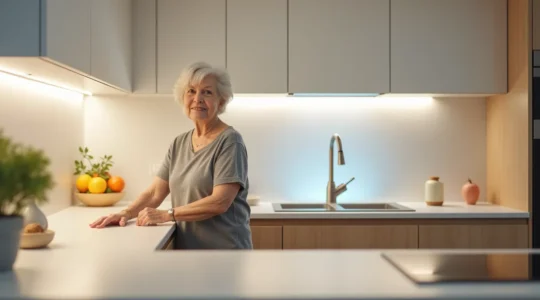
Stop relying on safety rules your aging parent can’t remember. The only real solution is to engineer a kitchen where fires and burns are physically unable to happen. This involves installing compensatory technology like automatic stove shut-offs to neutralize the…
Read more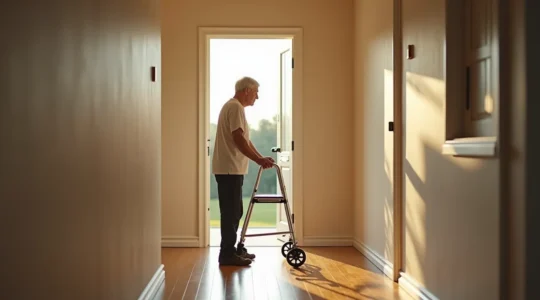
In summary: Standard door hinges prevent the door from clearing the frame, reducing usable width by up to 2 inches. Offset (swing-clear) hinges reposition the door outside the doorway, maximizing the clear opening for walkers and wheelchairs. Installation is a…
Read more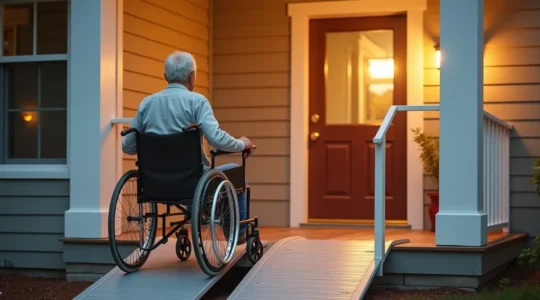
True home accessibility is not about meeting minimum codes, but about creating a seamless, low-energy path that ensures genuine safety and independence. A ramp’s slope is just one part of a “kinetic chain of access” that includes landings, doorways, and…
Read more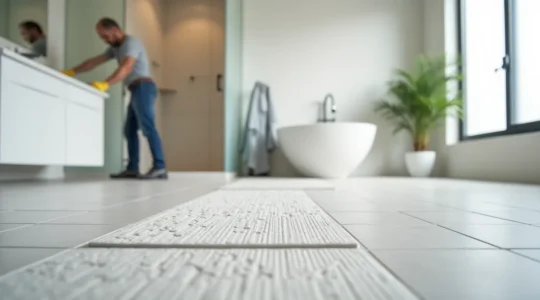
Choosing truly safe flooring for wet areas goes beyond texture; it requires understanding the quantifiable metrics of slip resistance. The Dynamic Coefficient of Friction (DCOF) is the key industry standard; a rating of 0.42 or higher is mandatory for wet,…
Read more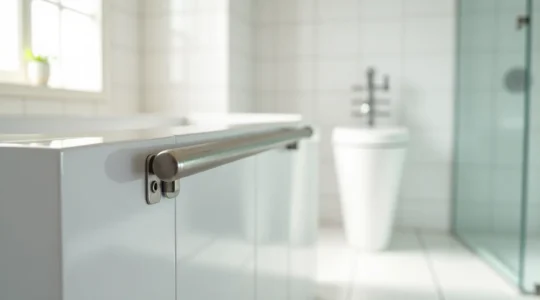
Proper grab bar installation is an engineering task, not a decoration project; the safety of a loved one depends on understanding system integrity, not just following a diagram. Secure mounting into studs or with high-capacity toggle bolts is non-negotiable; suction…
Read more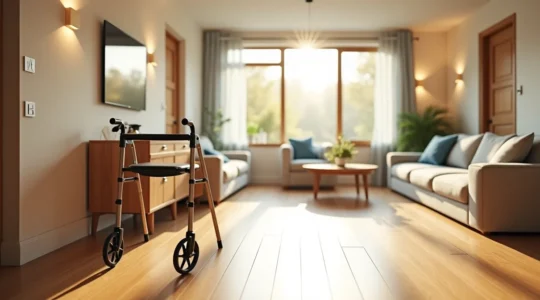
In summary: Effective senior home safety is less about expensive construction and more about strategic, low-cost adjustments to furniture, lighting, and daily habits. The biggest risks often hide in plain sight: “organized clutter” that overloads the brain and seemingly harmless…
Read more