
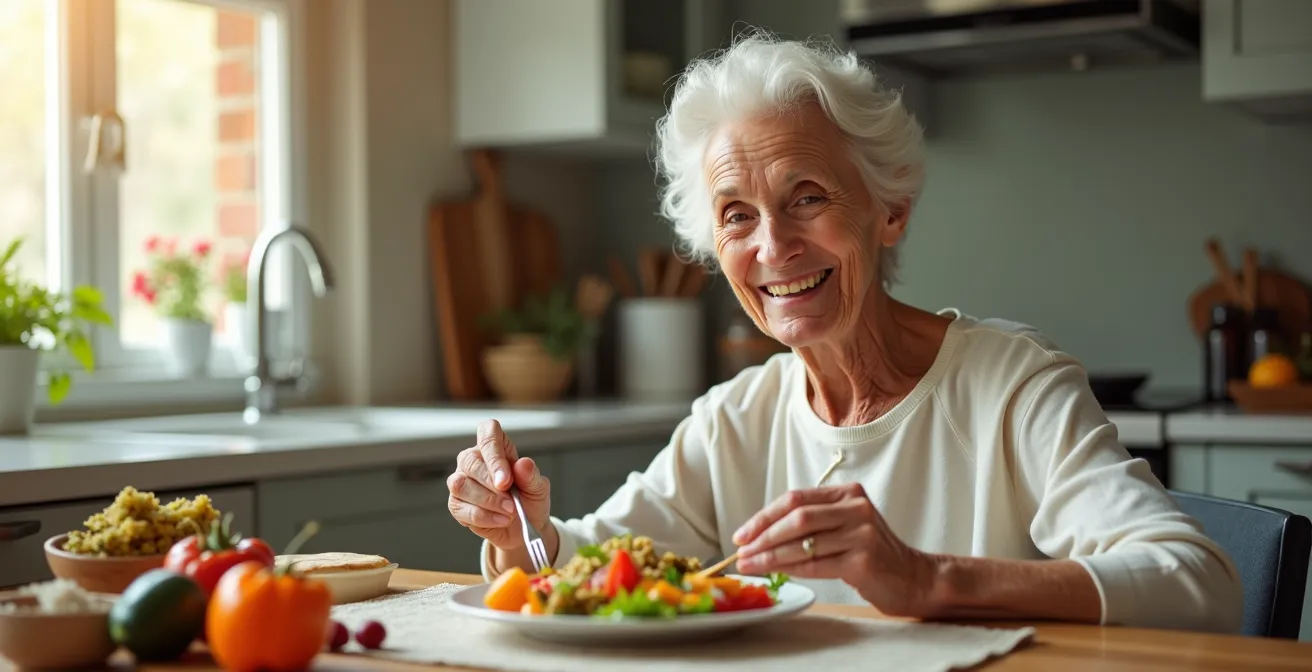
The frustrating reality for many seniors is that a slowing metabolism doesn’t just mean burning fewer calories; it means the body becomes less efficient at using nutrients, leading to muscle loss and fatigue even when eating “healthy.”
- An age-related process called “anabolic resistance” requires seniors to consume not just more, but more strategically timed protein to maintain muscle.
- Focus must shift from calories to nutrient-density, using techniques that make food both easy to eat and dignified to enjoy, especially when dealing with soft diets.
Recommendation: Prioritize hitting a protein target of 25-30 grams in 3-4 smaller meals throughout the day, focusing on the quality and appeal of the food, not just the quantity.
As a geriatric dietician, I often meet with families and seniors who are deeply concerned. They see unintended weight loss, dwindling energy levels, or a new frailty, and they can’t understand why. “Mom is eating three meals a day,” a son might tell me, “but she seems to be wasting away.” This is a common and distressing paradox of aging. The conventional wisdom of “eat less, move more” that governs much of adult life becomes dangerously counterproductive in later years. The metabolic engine doesn’t just slow down; its fundamental operating rules change.
Many well-intentioned caregivers focus on simply providing calories or resorting to bland, pureed foods that are rejected. They might ensure a senior drinks plenty of fluids, without realizing that not all liquids hydrate equally. The real challenge isn’t just getting seniors to eat; it’s getting their bodies to effectively use the nutrients they consume. This requires a shift in thinking away from generic dietary rules and towards a strategy of precision and dignity. The key isn’t to fight the metabolic slowdown, but to work with it, understanding the new requirements for protein synthesis, hydration, and nutrient absorption.
This article will not just tell you *what* to do. It will explain the science of *why* an aging body needs a different approach. We will move beyond the platitudes and provide actionable, science-backed strategies to build a nutritional foundation that supports vitality, strength, and well-being. From mastering nutrient-dense soft foods that look and taste delicious to timing meals for maximum muscle benefit, you will learn how to design a diet that truly nourishes.
This guide provides a clear roadmap to navigate the unique nutritional landscape of later life. Discover the specific, practical adjustments that can make a profound difference in a senior’s health and energy.
Summary: Adjusting Nutrition for Seniors’ Changing Metabolism
- Why seniors need more nutrients despite eating fewer calories?
- How to prepare nutrient-dense soft foods that don’t look like baby food?
- Tea, water, or juice: what counts towards hydration for seniors?
- The grapefruit and greens warning: foods that mess with heart medication
- Eating 5 small meals vs 3 large ones: which aids digestion better?
- How to shift to a 95% plant-based diet without losing muscle mass?
- How late-night alcohol consumption crashes your HRV the next day?
- Proactive Health Strategies: How to Design a “Blue Zone” Lifestyle in an Urban Apartment?
Why seniors need more nutrients despite eating fewer calories?
One of the most critical concepts to understand in senior nutrition is anabolic resistance. In younger individuals, a meal containing protein triggers a strong muscle-building (anabolic) response. As we age, the muscles become less sensitive to this signal. This means that the same amount of protein that would have maintained muscle mass at age 40 is no longer sufficient at age 75. A study on the topic confirmed that older adults have a significantly smaller capability to elevate muscle protein synthesis after eating compared to younger people. This blunted response is a primary driver of sarcopenia, the age-related loss of muscle mass and strength.
This is why simply reducing calories in line with a slower metabolism is a recipe for malnutrition. While overall energy needs decrease, the requirement for specific nutrients—especially protein—actually increases to overcome this resistance. Current research from a 2024 study in *Frontiers in Nutrition* confirms that older adults should aim for 1.0-1.3 grams of protein per kilogram of body weight daily, which is substantially higher than the standard recommendation for younger adults. This isn’t just about quantity, but also quality and timing, which we will explore later.
Beyond protein, the absorption of key micronutrients can also decline. Vitamins like B12 (essential for nerve function and red blood cells), Vitamin D, and Calcium (both crucial for bone health) are often less efficiently absorbed or synthesized by the body with age. Therefore, the foods a senior eats must be exceptionally nutrient-dense, packing more vitamins, minerals, and high-quality protein into a smaller caloric package to meet these elevated needs.
How to prepare nutrient-dense soft foods that don’t look like baby food?
For seniors facing dental issues, dysphagia (difficulty swallowing), or low appetite, a soft or pureed diet is often a necessity. However, the psychological impact of being served unidentifiable, bland mush can be profoundly demoralizing, leading to food refusal and further malnutrition. The key is to approach soft food preparation with the mindset of a chef, focusing on nutrient-density with dignity.
Color, flavor, and presentation are not frivolous details; they are essential tools to stimulate appetite. A vibrant plate signals freshness and flavor, which is especially important as the senses of taste and smell can diminish with age. Instead of combining everything into a single-colored puree, serve items separately. A swirl of green pesto on a bright orange carrot velouté or a dollop of white yogurt on a deep red beet puree can transform a meal from a chore into an experience.

As this image beautifully demonstrates, texture and color can make soft foods look gourmet. To achieve this, focus on fortifying foods without compromising taste. Unflavored protein powder can be whisked into soups and smoothies, while healthy fats like avocado or olive oil can be blended into vegetable purees to increase calorie density. Here are some strategies to elevate soft foods:
- Use food molds to reshape pureed items like chicken or carrots into their original form for better visual appeal.
- Layer umami flavors with ingredients like mushroom powder, tomato paste, and a sprinkle of parmesan to combat a reduced sense of taste.
- Create sophisticated “veloutés” and “bisques” instead of basic soups, and enhance them with vibrant garnishes like fresh herbs or a swirl of cream.
- Fortify purees with healthy fats like avocado and olive oil or add unflavored protein powder for calorie and nutrient density.
Tea, water, or juice: what counts towards hydration for seniors?
Hydration is critical for every bodily function, from cognitive clarity to digestion. However, the thirst mechanism becomes less reliable with age, meaning seniors may not feel thirsty even when their body is dehydrated. This makes proactive fluid intake essential. A common question is what, besides plain water, actually contributes to hydration. The answer is more nuanced than a simple yes or no; it’s best to think of beverages on a “Hydration Spectrum.”
Some fluids are net positive hydrators, while others can have a mild diuretic effect, potentially reducing overall hydration if consumed in large quantities without other fluids. It’s important to understand where common beverages fall on this spectrum to make smart choices throughout the day. For example, while coffee and black tea contain water, the caffeine in them can increase urine output. This doesn’t mean they must be avoided, but they shouldn’t be the primary source of fluids.
The following table, based on guidance from organizations like the National Council on Aging on healthy eating, breaks down the hydrating effects of different beverage categories.
| Beverage Category | Examples | Hydration Effect | Recommended Timing |
|---|---|---|---|
| Net Positive Hydrators | Water, herbal tea, bone broth | Excellent hydration | Throughout the day |
| Neutral | Milk, diluted juice, smoothies | Moderate hydration | Morning/afternoon |
| Mild Dehydrators | Coffee, black tea, alcohol | May reduce hydration | Limited, early in day |
Foods with high water content, like cucumbers, melon, and soups, also contribute significantly to daily hydration. The goal is to focus on the “Net Positive Hydrators” as the foundation, supplementing with others in moderation.
The grapefruit and greens warning: foods that mess with heart medication
For many seniors, managing chronic conditions like heart disease, high blood pressure, or high cholesterol involves daily medication. What is often overlooked is that common, healthy foods can have powerful interactions with these drugs, either making them dangerously potent or reducing their effectiveness. It is absolutely essential for caregivers and seniors to be aware of these potential conflicts and to discuss them with a doctor or pharmacist.
The most famous interaction is between grapefruit and statins (cholesterol-lowering drugs). Grapefruit contains compounds that inhibit a key enzyme (CYP3A4) in the intestines responsible for breaking down many medications. When this enzyme is blocked, the drug can build up in the bloodstream to toxic levels. This effect isn’t limited to statins; it can also affect certain blood pressure and anti-anxiety medications.
Another critical interaction involves leafy greens and blood thinners. Green vegetables like spinach, kale, and broccoli are rich in Vitamin K, which plays a vital role in blood clotting. Warfarin (Coumadin), a common blood thinner, works by inhibiting Vitamin K’s action. The old advice was to avoid these foods entirely. However, the modern approach is about consistency. Maintaining a stable, consistent daily intake of Vitamin K allows the doctor to adjust the warfarin dose accordingly. A sudden binge on a large kale salad or, conversely, completely eliminating greens can throw this delicate balance off and lead to a risk of clotting or bleeding.
These are not the only interactions to watch for. Foods high in potassium (like bananas and potatoes) can be problematic for those on ACE inhibitors, and even natural black licorice can interfere with some diuretics and blood pressure medications. Always read medication labels and consult a healthcare professional before making significant dietary changes.
Eating 5 small meals vs 3 large ones: which aids digestion better?
The debate between eating several small meals or three larger ones is common in nutrition, but for seniors, the answer depends heavily on individual health conditions. There is no single “best” approach; rather, it’s a matter of personalizing meal frequency to support digestion, manage appetite, and optimize nutrient absorption, particularly for muscle health.
For seniors with digestive issues like acid reflux or gastroparesis (delayed stomach emptying), five or six small meals can be a game-changer. A large meal can overwhelm the digestive system, causing discomfort, bloating, and heartburn. Smaller, more frequent meals place less of a burden on the stomach and can help manage symptoms while ensuring adequate calorie and nutrient intake. This approach is also beneficial for those with a poor appetite, as a small plate can feel much less daunting than a large one.
Conversely, for seniors managing blood sugar levels, three structured meals might be more effective for maintaining stability. From a muscle health perspective, research shows that splitting protein intake throughout the day is superior for stimulating muscle protein synthesis. Ingesting 25-30g of protein elevates this muscle-building process for several hours. Therefore, a pattern of 3-4 smaller, protein-focused meals can be more effective at combating sarcopenia than consuming the majority of protein in one large dinner. The key is distributing protein intake evenly to repeatedly trigger the muscle-building response.
Your Action Plan: Personalizing Meal Frequency
- Assess digestive comfort: Choose smaller meals if you experience gastroparesis, bloating, or acid reflux after eating.
- Monitor blood sugar: Opt for 3 structured meals for more predictable blood sugar management if that is a primary concern.
- Analyze protein intake: Consider a larger, protein-forward meal at midday when energy and metabolism are often at their highest.
- Observe sleep patterns: Front-load calories earlier in the day and keep evening meals light for better sleep quality.
- Adapt to changes: Adjust your meal schedule based on daily appetite fluctuations and the timing of medications.
How to shift to a 95% plant-based diet without losing muscle mass?
Shifting towards a plant-based diet offers numerous health benefits, including improved heart health and a lower risk of certain diseases. However, a major concern for seniors making this transition is the risk of accelerating muscle loss. This is a valid worry, as many plant proteins are less efficiently used by the body than animal proteins. Yet, with a strategic approach, it is entirely possible to maintain or even build muscle on a predominantly plant-based diet.
The secret lies in understanding the role of a specific amino acid: leucine. Leucine acts as the primary “trigger” for muscle protein synthesis. If a meal doesn’t contain enough leucine, the muscle-building process doesn’t switch on effectively, regardless of the meal’s total protein content. Animal proteins are naturally rich in leucine, while most plant proteins are not. According to nutrition experts, a meal needs to provide about 2.5-3g of leucine to cross this muscle-building threshold.
Therefore, a successful plant-based strategy for seniors must be “leucine-centric.” This means prioritizing plant foods that are either high in leucine or combining foods to reach the target. Good plant sources of leucine include soy products (tofu, edamame, soy milk), lentils, and pumpkin seeds. A high-quality plant-based protein powder (like a soy or pea blend) can be an invaluable tool to ensure each meal hits the leucine target, especially for those with low appetites. Focus on these practical steps:
- Prioritize low-volume, high-protein plant sources like firm tofu, edamame, and hemp hearts.
- Use a plant protein powder in a smoothie or mixed into oatmeal to help meet the leucine threshold at breakfast.
- Focus on complete proteins like quinoa, soy, and buckwheat, which contain all essential amino acids.
- Combine complementary proteins, such as legumes with grains (e.g., beans and rice), to create a complete amino acid profile.
How late-night alcohol consumption crashes your HRV the next day?
A “nightcap” is a long-standing tradition for many, believed to aid relaxation and sleep. While alcohol can indeed make you feel sleepy initially, its effect on the body overnight is profoundly disruptive, especially for seniors. One of the clearest ways to see this impact is through Heart Rate Variability (HRV), a measure of the variation in time between each heartbeat. A high HRV is a sign of a healthy, resilient nervous system, while a low HRV indicates stress and fatigue. Late-night alcohol consumption is one of the fastest ways to crash your HRV.
The reason for this is the battle it creates within your autonomic nervous system. This system has two main branches: the sympathetic (“fight-or-flight”) and the parasympathetic (“rest-and-digest”). Deep, restorative sleep is dominated by the parasympathetic system. However, when you consume alcohol, your body treats it as a toxin that must be metabolized. This processing job keeps your sympathetic nervous system activated long into the night.
Alcohol metabolism keeps the sympathetic ‘fight-or-flight’ nervous system activated overnight to process toxins, preventing the parasympathetic ‘rest-and-digest’ system from engaging.
– Cardinal View Senior Living Health Team, How to Speed Up Metabolism After 60
This sustained “fight-or-flight” state prevents you from entering deep sleep stages, raises your resting heart rate, and plummets your HRV. You may wake up feeling unrefreshed, anxious, or fatigued, even after a full 8 hours in bed. For a senior metabolism that is already working hard to repair and recover, this is a significant stressor. Instead of an alcoholic nightcap, consider alternatives that support the parasympathetic system:
- Tart cherry juice, a natural source of melatonin.
- Warm chamomile tea, perhaps with a scoop of magnesium glycinate powder.
- Golden milk made with warm milk (or almond milk), turmeric, and ginger.
Key Takeaways
- Seniors have higher protein needs (1.0-1.3g/kg) due to anabolic resistance, requiring a focus on nutrient-density over calorie-cutting.
- Meal presentation and flavor are crucial for stimulating appetite; use techniques like food molds and umami flavors to make soft foods dignified.
- Meal frequency should be personalized: smaller, frequent meals for digestive issues, and even protein distribution across 3-4 meals to maximize muscle synthesis.
Proactive Health Strategies: How to Design a “Blue Zone” Lifestyle in an Urban Apartment?
The “Blue Zones” are regions of the world where people live exceptionally long, healthy lives. Their lifestyles are characterized by natural movement, a plant-slant diet, strong community ties, and a sense of purpose. While we may not live in a Sardinian village, it is entirely possible to replicate the core principles of a Blue Zone lifestyle, even within the confines of an urban apartment. This proactive approach to health synthesizes all the nutritional strategies we’ve discussed into a holistic way of life.
First, integrate natural movement into the daily routine. This isn’t about intense gym workouts, but consistent, gentle activity. Senior fitness experts have developed “furniture circuits” that use the home environment for exercise: chair squats while waiting for a kettle to boil, wall push-ups in a hallway, or countertop leg lifts while washing dishes. These small bouts of activity accumulate throughout the day, maintaining functional fitness and metabolic health without needing any special equipment.
Second, foster community and purpose. Social isolation is a significant health risk for seniors. Technology can be a powerful bridge. Schedule weekly “virtual family dinners” via video calls to share a meal with loved ones. Join local Meetup groups for seniors or online communities centered around a hobby. Starting a small project, like cultivating an indoor herb garden or organizing old family photos into a digital legacy, provides a daily sense of purpose, which is a cornerstone of longevity. These activities nourish the spirit just as a healthy diet nourishes the body.
- Start a building-wide book club or a scheduled walking group to build local connections.
- Cultivate an indoor herb garden on a windowsill for fresh ingredients and a daily task.
- Begin a digital legacy project, such as writing memoirs or organizing family photos online.
- Schedule regular video calls with family and friends to maintain strong social bonds.
By thoughtfully designing one’s environment and schedule, an apartment can become a personal Blue Zone—a space that promotes health, connection, and vitality. It’s about making the healthy choice the easy choice, every single day.
By embracing a diet founded on nutrient-density, strategic protein intake, and smart hydration, and weaving it into a lifestyle that includes movement, purpose, and community, seniors can actively partner with their changing metabolism to foster years of health and vitality. To apply these principles effectively, the next step is to conduct a personal dietary and lifestyle audit to identify the most impactful changes you can make today.
Frequently Asked Questions on Senior Nutrition and Metabolism
Why does grapefruit interfere with statins?
Grapefruit contains compounds that inhibit the CYP3A4 enzyme, which is necessary for the body to metabolize statins and other drugs. When this enzyme is blocked, the medication can accumulate in the bloodstream to potentially dangerous levels.
Should warfarin users avoid all Vitamin K foods?
No, the modern medical approach is not total elimination but rather maintaining a consistent and stable daily intake of Vitamin K. This allows a doctor to prescribe a stable medication dosage that works with your regular diet, avoiding fluctuations that could lead to clotting or bleeding risks.
What other food-drug interactions should seniors watch for?
Besides grapefruit and leafy greens, seniors should be cautious about several other interactions. These include high-potassium foods (like bananas) with ACE inhibitors, natural licorice with certain diuretics, and tyramine-rich foods (like aged cheeses and cured meats) with MAOI antidepressants.