
For seniors and individuals with reduced mobility, maintaining independence at home represents far more than convenience—it embodies dignity, comfort, and quality of life. Yet this cherished independence comes with legitimate concerns: What happens during a medical emergency when alone? How can families stay informed about their loved one’s wellbeing from a distance? These questions have driven remarkable innovations in remote care technology and home safety solutions that bridge the gap between autonomy and security.
The landscape of aging in place has transformed dramatically. Where families once faced the difficult choice between constant in-person supervision or institutional care, technology now offers a middle path. Remote care systems monitor health indicators, environmental sensors detect unusual patterns, and emergency response devices provide instant connections to help. This article explores the essential components of a comprehensive remote care and home safety strategy, empowering you to make informed decisions about protecting what matters most while preserving independence.
Remote care technology functions as an invisible safety net, quietly monitoring wellbeing while remaining unobtrusive in daily life. Think of it as having a watchful guardian who never sleeps, never gets distracted, yet never interferes with normal activities. These systems collect data, identify concerning patterns, and alert appropriate parties only when necessary.
Modern health monitoring extends far beyond simple step counting. Medical-grade wearable devices now track vital signs including heart rate, blood pressure, oxygen saturation, and even irregular cardiac rhythms. These devices continuously collect data and can automatically alert caregivers or healthcare providers when measurements fall outside safe parameters.
For seniors managing chronic conditions like diabetes or heart disease, continuous monitoring provides invaluable peace of mind. A wearable glucose monitor, for example, eliminates painful finger pricks while tracking blood sugar levels throughout the day and night. When readings become concerning, the device alerts the wearer and can simultaneously notify family members or medical professionals. Recent studies indicate that such continuous monitoring can reduce emergency hospitalizations by helping individuals respond to warning signs before situations become critical.
While wearables monitor the person, environmental sensors monitor the home itself. These discreet devices track movement patterns, room temperatures, door openings, appliance usage, and even water flow. The real intelligence lies not in any single data point, but in recognizing patterns and detecting deviations.
Consider this practical example: motion sensors in various rooms establish a baseline of normal daily routines—morning bathroom visits, kitchen activity during meal times, evening movement to the bedroom. If sensors detect no movement by mid-morning when someone typically rises early, the system sends an alert. Similarly, if a stove remains on for an unusual duration or a refrigerator door stays open, caregivers receive notifications. This passive monitoring respects privacy while providing reassurance that daily life continues normally.
Falls represent the leading cause of injury-related deaths among older ad
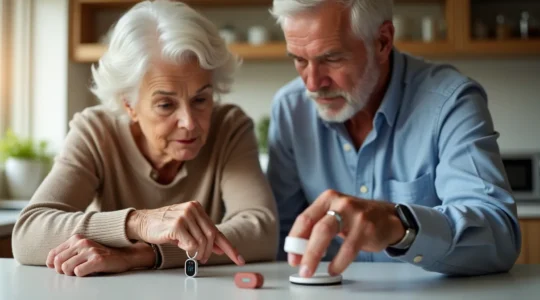
Choosing a Personal Emergency Response System (PERS) is not about “active vs. home-bound” but about analyzing a device’s usability and reliability during a genuine crisis. The most critical features are those that function under duress, such as speaker clarity during…
Read more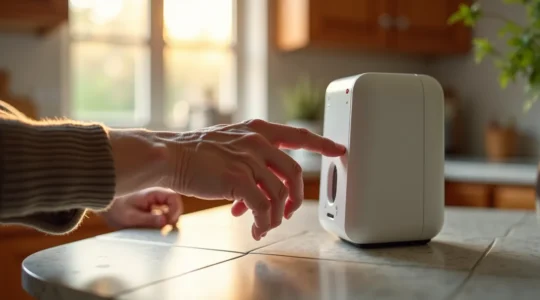
The true value of an automated medication dispenser lies not in its ability to dispense pills, but in its function as a risk-management system that prevents the catastrophic failures of manual medication management. It actively prevents common errors like “double-dosing”…
Read more
The key to lasting vitality isn’t just tracking activity or sleep; it’s understanding your body’s capacity for recovery, and Heart Rate Variability (HRV) is the most direct way to measure it. Low HRV signals a state of chronic stress and…
Read more
For a tech-resistant senior, the best wearable isn’t the one with the most features, but the one that requires the least interaction. Smart rings excel at “set-and-forget safety” by prioritizing passive, 24/7 data collection with minimal user input and weekly…
Read more
Your doctor might dismiss vague feelings, but they can’t ignore a clear data trend. Focus on long-term trends and gradual changes, not single, dramatic spikes. Correlate numbers (like daily weight) with physical symptoms (like breathlessness) to show cause and effect….
Read more
The least intrusive telecare system isn’t the one with the fewest gadgets, but the one that empowers a senior’s autonomy through trust and consent. Passive systems (like motion sensors) can offer robust safety data without the feeling of being watched…
Read more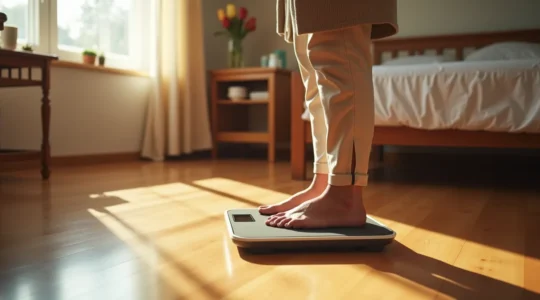
Remote Patient Monitoring transforms you from a passive patient into an active partner in your own care, using daily data to prevent hospital readmissions before a crisis begins. Early detection of fluid retention through daily weight checks allows for intervention…
Read more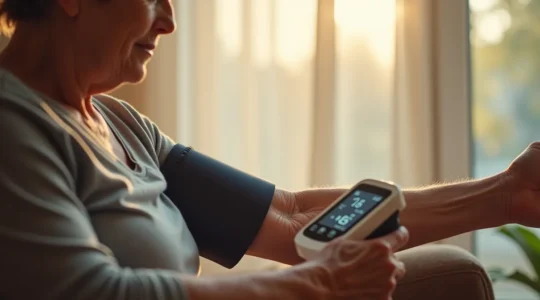
Home blood pressure readings are often dismissed by doctors because they are perceived as unreliable. This guide provides the clinical-grade protocol to change that. The accuracy of your data depends more on your technique (correct cuff, arm position) than on…
Read more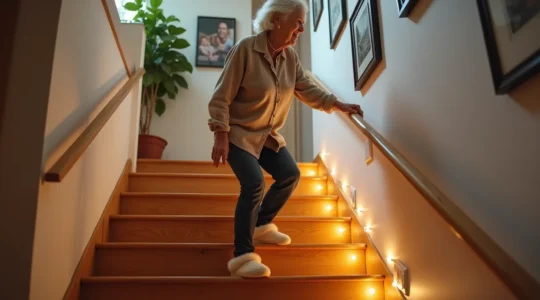
The key to preventing nighttime falls is not just adding lights, but engineering an automated “path of illumination” that supports the body’s natural balance. Dedicated motion detectors react instantly, unlike smart bulbs which can have dangerous delays. Searching for a…
Read more