
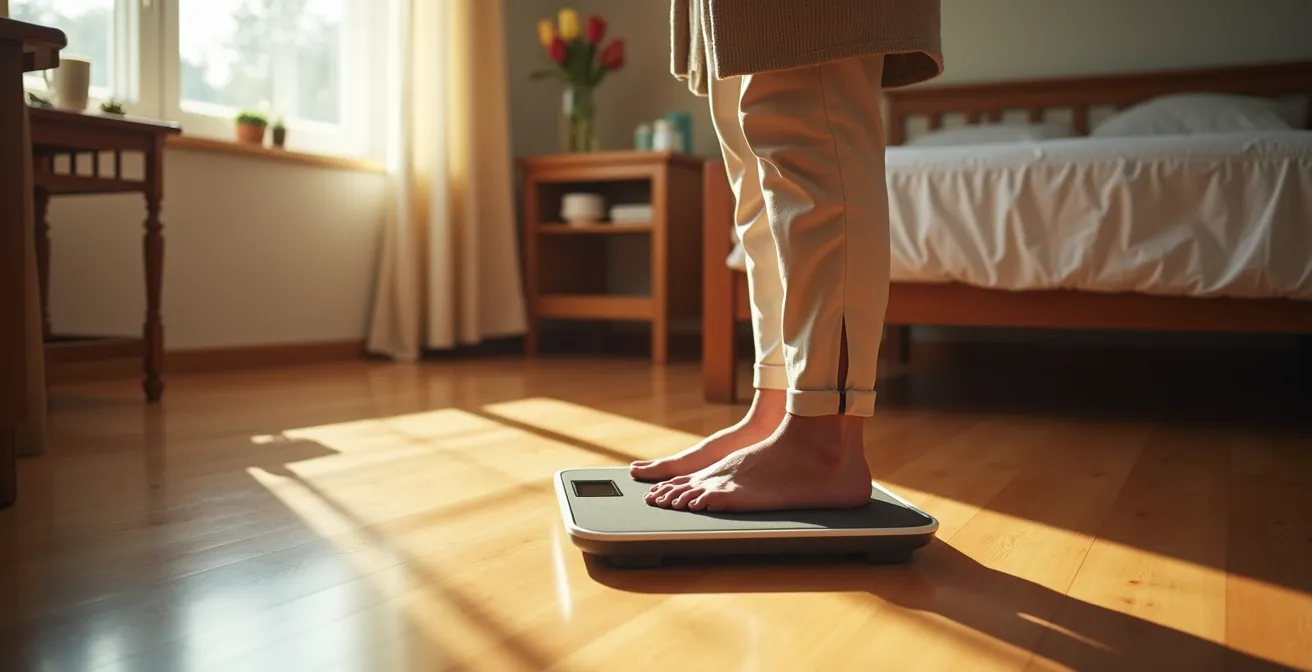
Remote Patient Monitoring transforms you from a passive patient into an active partner in your own care, using daily data to prevent hospital readmissions before a crisis begins.
- Early detection of fluid retention through daily weight checks allows for intervention days before you would feel symptoms like breathlessness.
- Simple, cellular-based technology removes technical barriers, making it easy to transmit vitals without needing WiFi or computer skills.
Recommendation: Embrace this technology not as a monitor, but as a ‘digital co-pilot’ that helps you and your care team make better, proactive decisions together.
The cycle of a heart failure diagnosis, hospitalization, and subsequent readmission is a stressful and draining experience for patients and their families. It can feel like a revolving door you can’t escape. For many, managing this chronic condition feels like a constant state of anxiety, waiting for the next symptom to flare up. While traditional advice focuses on diet, exercise, and medication adherence, these pillars often lack a crucial component: early, objective data to catch problems before they escalate. In 2022, 12% of Medicare fee-for-service beneficiaries had a heart failure diagnosis, highlighting the vast number of individuals navigating this challenge.
Many believe that staying out of the hospital is simply a matter of luck or strictly following doctor’s orders. They might fear that new technology will be too complicated, intrusive, or that their privacy will be compromised. But what if the key to breaking the readmission cycle isn’t just passive compliance, but active partnership? What if a simple, daily routine could provide the insights needed to adjust care in real-time, effectively stopping a potential hospitalization in its tracks? This is the promise of Remote Patient Monitoring (RPM).
This article shifts the perspective from “being monitored” to “being empowered.” We will explore the concrete mechanisms by which RPM works, demystify the technology, clarify financial coverage, and address common fears. Ultimately, you will see how this system serves as a powerful tool for data-to-dialogue, enabling you to become a more informed advocate for your own health and stay safely at home.
To provide a clear and comprehensive overview, this guide breaks down the most critical aspects of using Remote Patient Monitoring for heart failure. From understanding the science behind daily measurements to leveraging your data for better care, each section is designed to answer your key questions and build your confidence in this life-changing technology.
Summary: Remote Health Tracking: How to Use Personal Data to Advocate for Better Care?
- Why monitoring weight daily detects fluid buildup before breathlessness starts?
- How to set up the transmission hub without needing WiFi expertise?
- Medicare coverage: which RPM devices are paid for by insurance?
- Who sees my data? Addressing privacy fears with remote monitoring
- The daily transmission window: when is the best time to send your vitals?
- Ignoring the drift: why small daily increases matter more than one spike?
- Infection or healing? Sending photos to nurses to catch issues early
- Remote Health Tracking: How to Use Personal Data to Advocate for Better Care?
Why Monitoring Weight Daily Detects Fluid Buildup Before Breathlessness Starts?
Daily weight monitoring is the cornerstone of heart failure management because weight is the most sensitive, non-invasive indicator of fluid retention. When your heart doesn’t pump efficiently, your body can retain excess fluid, a condition called edema. This extra fluid first accumulates in your tissues, leading to a measurable increase in weight. This happens long before the fluid builds up in your lungs and causes noticeable symptoms like shortness of breath, coughing, or swelling in your legs and ankles. By catching this weight gain early, your care team can intervene by adjusting your diuretic medication, preventing the progression to a full-blown crisis that would require hospitalization.
This principle of proactive prevention is not just theoretical; it’s backed by significant clinical evidence. For instance, advanced systems like the CardioMEMS sensor, which directly measures pressure in the pulmonary artery, have demonstrated the power of daily monitoring. The MONITOR-HF trial revealed a staggering 44% reduction in heart failure-related hospitalizations for patients using this technology alongside their prescribed therapy. While not all RPM involves an implant, the underlying principle is the same: daily data provides the early warning needed to act decisively.
To ensure your daily weight measurements are accurate and useful, consistency is key. Following a simple routine removes variables and makes the data more reliable for your clinical team. Here are the best practices:
- Weigh yourself at the same time each day, preferably in the morning.
- Always perform your weigh-in after using the restroom but before you eat or drink anything.
- Use the same scale every day and place it on a hard, flat surface.
- Keep a log of your daily weight to help you and your nurses spot trends.
- Be vigilant for key triggers: a gain of 2-3 pounds in 24 hours or 5 pounds in a week is a signal to contact your care team immediately.
By transforming a simple number on a scale into a powerful piece of clinical intelligence, you gain precious time—time to adjust treatment, time to avoid the emergency room, and time to live more freely with your condition.
How to Set Up the Transmission Hub Without Needing WiFi Expertise?
One of the most common anxieties for patients considering RPM is the technology itself. The thought of setting up complex devices, troubleshooting connections, and dealing with passwords can be overwhelming. However, modern RPM systems are specifically designed to eliminate this burden. The majority of transmission hubs today operate on cellular networks, just like a mobile phone, meaning there is no need for an internet connection, WiFi password, or any technical configuration from you. The device is truly “plug and play.”
The setup process is intentionally simplified. Typically, the transmission hub is a small, discreet device that you simply plug into a standard electrical outlet in a central location in your home, like the living room or bedroom. Once plugged in, it automatically connects to the strongest local cellular network and establishes a secure link to your healthcare provider’s system. There are no buttons to press or settings to configure. A small light on the hub will usually indicate that it is connected and ready to receive data from your monitoring tools (like your scale or blood pressure cuff). This design ensures that the technology fades into the background, allowing you to focus on your health, not on being a tech expert.
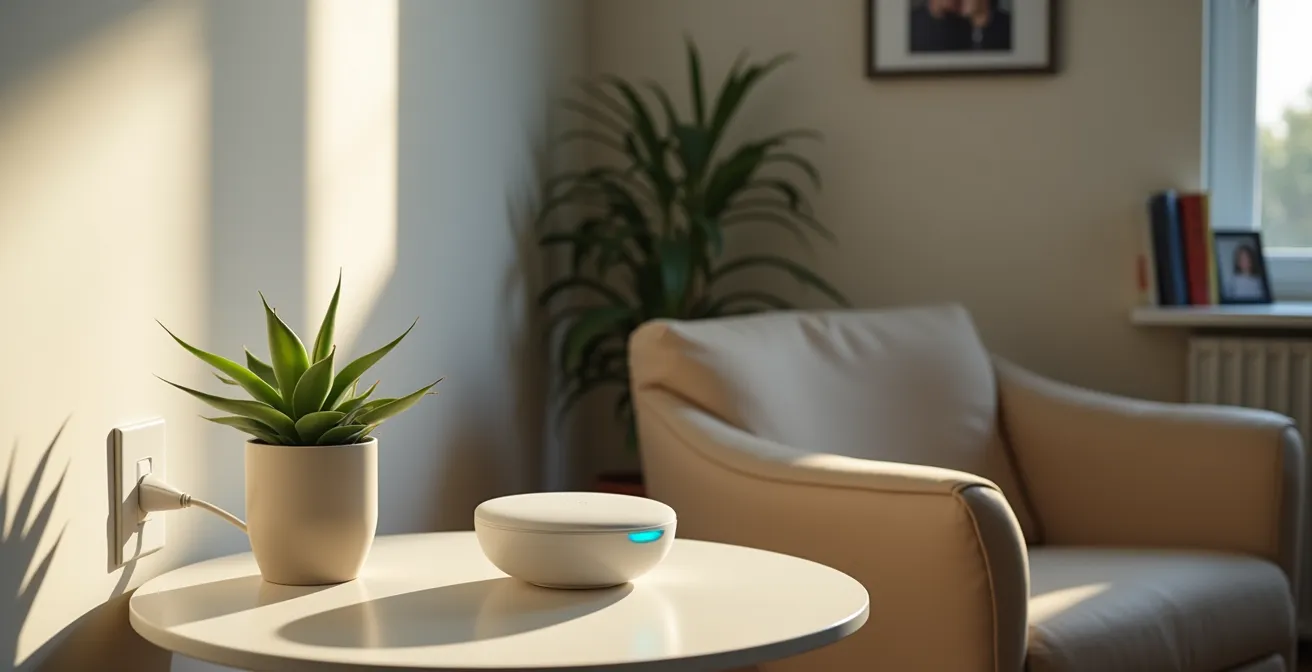
This seamless integration is crucial for user adoption and long-term success. The goal is to make the daily process of taking and transmitting your vitals as effortless as making a cup of coffee. Furthermore, you are never left to figure things out on your own. Reputable RPM programs include comprehensive onboarding and support, as highlighted by the Orlando Health RPM team’s patient-centric approach.
Once received, one of our nurses will call to train you on the Remote Monitoring software and ensure you feel comfortable using the tablet and monitoring tools.
– Patient experience with Orlando Health RPM setup
This “digital co-pilot” approach removes the fear of the unknown. The system is designed for you, not for a technology enthusiast, ensuring that anyone can benefit from the safety and peace of mind that remote monitoring provides, regardless of their technical confidence.
Medicare Coverage: Which RPM Devices Are Paid for by Insurance?
Understanding the financial aspect of Remote Patient Monitoring is crucial for peace of mind, and the good news is that Medicare provides robust coverage for these services. Recognizing the value of RPM in preventing costly hospitalizations, Medicare has established specific CPT (Current Procedural Terminology) codes that allow healthcare providers to bill for setting up the equipment, supplying the devices, and monitoring your data. This means that for eligible patients with chronic conditions like heart failure, the service is typically covered as part of their benefits, often with minimal to no out-of-pocket cost, depending on their supplemental insurance plan.
For these services to be covered, providers must meet certain requirements. For example, Medicare requires at least 16 days of data transmission within a 30-day period to qualify for reimbursement for the device supply. This underscores the importance of consistent daily use. The system is designed to reward proactive engagement in your own health. The coverage is not just for the device itself but also for the clinical oversight—the time your nurses and doctors spend reviewing your data and responding to it. This ensures you are receiving a comprehensive clinical service, not just a piece of hardware.
The billing structure is broken down into several key components, which helps clarify what the service entails. The following table, based on an analysis of current Medicare reimbursement rates, illustrates how these services are categorized and valued.
| CPT Code | Description | 2024 Medicare Rate | Billing Frequency |
|---|---|---|---|
| 99453 | Device setup and patient education | $19.65 | Once per device |
| 99454 | Device supply with 16+ days of data transmission | $46.50 | Every 30 days |
| 99457 | First 20 minutes of monthly monitoring | $48.14 | Monthly |
| 99458 | Additional 20-minute increments | $38.49 | Up to 2x monthly |
By covering both the technology and the clinical time, Medicare affirms that RPM is an essential part of modern chronic disease management. This structure ensures you have access to a dedicated team actively working to keep you healthy and out of the hospital.
Who Sees My Data? Addressing Privacy Fears With Remote Monitoring
In an age of data breaches and digital insecurity, it is perfectly natural to ask: “Who is seeing my personal health information, and is it safe?” RPM providers take this concern extremely seriously. Your health data is protected by the same federal law that protects all of your medical records: the Health Insurance Portability and Accountability Act (HIPAA). This means there are strict legal and technical safeguards in place to ensure your information is only accessible to authorized individuals on your direct care team.
Your data is not sent over the open internet like a regular email. From the moment it leaves your monitoring device, it is encrypted and transmitted over a secure, private network directly to your healthcare provider’s system. This process is designed to be as secure as your online banking transactions. As the Orlando Health RPM team puts it, this level of security is non-negotiable.
Your data is encrypted to the same level as your online banking.
– Orlando Health RPM Team, Orlando Health Remote Patient Monitoring Program
The “who” is just as important as the “how.” The only people who review your daily readings are a dedicated team of specialized heart failure nurses and doctors responsible for your care. Your data is not shared with insurance adjusters for rate calculations, with marketing companies, or with anyone outside of your direct clinical circle. The purpose of the data is purely clinical: to monitor your health, identify potential issues early, and manage your treatment plan effectively. This creates a secure and focused loop of information, turning your data into a meaningful dialogue with the people who are directly invested in your well-being.
Ultimately, RPM is an extension of the trusted relationship you have with your cardiology team. The technology is simply the channel for a more continuous and informed conversation, protected by the highest standards of medical privacy and security.
The Daily Transmission Window: When Is the Best Time to Send Your Vitals?
The best time to take and transmit your vitals is first thing in the morning, as part of a consistent daily routine. This timing is strategic for several reasons. Firstly, your body is in a “basal state” upon waking—before the effects of food, drink, medication, or physical activity can influence your readings. A weight measurement taken after you’ve had breakfast and a large glass of water will be artificially high, while a blood pressure reading taken after a stressful phone call will not reflect your true resting state. A consistent morning routine creates a stable baseline, making it easier for your nurses to spot a genuine change versus a simple daily fluctuation.
Secondly, establishing a morning ritual helps integrate the task into your daily life, making it a habit you are less likely to forget. The process itself is designed to be quick and efficient. As described in the Orlando Health program, you might receive a text message with a link to a patient portal where you answer a few quick questions. After taking your vitals—blood pressure, heart rate, oxygen level, and weight—the devices automatically transmit the data through the cellular hub. The entire process can take just a few minutes but provides a full day’s worth of peace of mind for both you and your care team.
To ensure you’re providing the most accurate and useful data, following a structured checklist can be incredibly helpful. This plan turns the process into a simple, repeatable sequence.
Your Morning Vitals Action Plan
- First Step, First: Wake up and use the restroom before doing anything else. This ensures your weight measurement is not affected by a full bladder.
- Calibrate the Scale: Step on the scale before eating or drinking. This provides the most accurate “dry weight” for comparison.
- Rest and Read: Sit in a comfortable chair for a few minutes to relax before taking your blood pressure and heart rate. This gives a true resting measurement.
- Check Oxygen: If your doctor has prescribed it, use your pulse oximeter to check your oxygen saturation levels while you are still seated and relaxed.
- Trust the Tech: Allow your devices to automatically and securely transmit the data. There’s no need to write anything down or send anything manually.
By making this a consistent part of your morning, you provide your clinical team with the clear, reliable data they need for proactive prevention, transforming a few minutes each day into a powerful tool for long-term health.
Ignoring the Drift: Why Small Daily Increases Matter More Than One Spike?
In heart failure management, the most dangerous trend is often not a sudden, dramatic spike in weight, but a slow, persistent upward “drift.” It’s easy to dismiss a one-pound gain as a fluke—perhaps due to a salty meal. But a one-pound gain that day, followed by another the next, and another the day after, is a clear signal of accumulating fluid. This is the ‘subtle drift’, and it is the critical early warning sign that RPM is designed to detect. By the time this slow accumulation leads to a five-pound gain over a week, you may be on the verge of symptomatic fluid overload, but catching it on day two or three allows for a simple intervention, like an extra dose of a water pill, to reverse the trend.
Think of your body like a glass of water being filled one drop at a time. The first few drops are unnoticeable. Halfway full, it still seems manageable. But a few more drops can cause it to overflow suddenly. Daily monitoring allows your nurses to see the water level rising incrementally and to act long before it reaches the brim. This is why a clinical trigger is often set for a seemingly small amount; for many heart failure programs, a 2 lb weight gain in 24 hours triggers an alert and a call from a nurse. They are trained to see the pattern, not just the isolated number.

Ignoring this drift is one of the biggest risks in self-managing heart failure. Without the objective eye of daily data and a clinical team to interpret it, patients often don’t recognize the danger until they are already in distress. Symptoms like breathlessness or severe swelling mean the “glass has already overflowed.” The entire goal of RPM is to prevent that from happening. It transforms the management of heart failure from a reactive crisis response to a proactive, data-driven partnership.
By paying attention to the subtle drift, you and your team can make small adjustments that have a huge impact, keeping you healthier, more comfortable, and safely at home.
Infection or Healing? Sending Photos to Nurses to Catch Issues Early
Beyond numbers like weight and blood pressure, visual information can be incredibly valuable in remote care, especially for post-operative recovery or managing skin integrity. A common challenge after a hospital stay, particularly if a procedure was performed, is monitoring an incision site. Is the redness a sign of normal healing, or is it the beginning of an infection? For patients with fluid retention, is the swelling in their legs improving or worsening? Describing these changes over the phone can be difficult and subjective. This is where “store-and-forward” telehealth—the practice of securely sending photos and videos to your care team—becomes a powerful tool.
Instead of relying on a verbal description, you can use the camera on the provided tablet or your own smartphone to send a clear picture of the area of concern. A heart failure nurse can look at the image and quickly assess the situation with a trained eye. They can compare today’s photo to yesterday’s to track progression, helping to differentiate between normal post-operative healing and the early signs of a complication that requires treatment. This simple act of sending a photo can prevent an unnecessary trip to a clinic or, more importantly, trigger a necessary intervention before a minor issue becomes a major problem. This practice is a key component of what experts refer to as home telehealth, integrating simple data transfer from mobile devices into daily care.
To ensure the photos you send are clinically useful, it’s important to follow a few best practices for clear and consistent documentation:
- Use Good, Consistent Lighting: Natural daylight near a window is often best. Avoid harsh shadows or dim light that can obscure details.
- Maintain the Same Angle and Distance: Taking the photo from the same position each day makes it much easier to spot subtle changes over time.
- Provide a Sense of Scale: If documenting swelling, placing a common object like a coin next to the area can help the nurse gauge the size.
- Ensure the Area is Clear: Take the photo before applying any creams or ointments.
- Submit with Your Vitals: Send the photos at the same time as your daily vital signs so your care team has a complete picture of your health for that day.
This simple use of technology bridges the distance between you and your nurse, providing clarity and allowing for faster, more accurate clinical decision-making, all from the comfort of your home.
Key Takeaways
- RPM is an active partnership, not passive surveillance; it empowers you with data to prevent crises.
- The technology is designed for simplicity, using cellular hubs that don’t require WiFi or technical skill.
- Consistent morning measurements provide the most reliable data, and small, steady changes (the ‘subtle drift’) are more significant than single spikes.
Remote Health Tracking: How to Use Personal Data to Advocate for Better Care?
Perhaps the most profound benefit of Remote Patient Monitoring is that it transforms you into the most informed expert on your own body. After weeks of tracking your daily vitals, you start to see patterns. You might notice that your blood pressure is slightly higher on days you have more salt, or that your weight ticks up after a day of reduced activity. This data is not just for your nurse; it’s for you. It becomes the foundation for informed advocacy, allowing you to have more productive, data-driven conversations with your doctors and actively participate in your treatment plan.
Instead of arriving at a follow-up appointment and saying, “I’ve been feeling a bit more tired lately,” you can arrive with a printed report and say, “You can see here on the 15th, my weight started to drift up, and that’s when I began feeling more fatigued. After the medication adjustment you called in on the 17th, my weight stabilized, and my energy improved.” This level of specific, objective information is invaluable to a physician. As the UCHealth team notes, this data directly enables better clinical care.
When doctors have access to real-time data on a patient’s heart function, they can make more informed decisions about which medications to prescribe and in what doses.
– UCHealth CardioMEMS Team, UCHealth Innovation Report
To prepare for your doctor’s visit and make the most of your RPM data, a little preparation goes a long way. This checklist will help you turn your data into a powerful tool for your next appointment:
- Request a Data Summary: Ask your RPM nurse to provide a summary report for the period since your last visit.
- Highlight Key Events: Circle any dates on the report where your readings were concerning or when you experienced new or worsening symptoms.
- Connect Actions to Outcomes: Make notes about your activities, diet, or medication changes and how they correspond to trends in your data.
- Prepare Specific Questions: Based on the data, formulate questions like, “I’ve noticed my blood pressure is consistently low in the mornings. Should we consider adjusting my medication timing?”
- Bring a Printed Copy: Having a physical copy of your trend report makes it easy for you and your doctor to review it together.
You are no longer just a recipient of care; you are a data-informed partner in creating your own health outcomes. This is the ultimate goal of Remote Patient Monitoring: to give you the tools and the confidence to take control of your condition and live a fuller, healthier life outside the hospital walls.
Frequently Asked Questions on Remote Patient Monitoring for Heart Failure
Who specifically reviews my daily readings?
A dedicated team of heart failure nurses carefully reviews your data, tracking measurements against your previous data and heart failure benchmarks. They are your primary point of contact and are specially trained to interpret the subtle changes in your vitals.
Is my data shared with insurance companies?
No. Your data is transmitted via a secure, HIPAA-compliant network exclusively to your heart failure care team. It is considered part of your private medical record and is not shared with insurance adjusters or any third-party marketing companies.
What happens if there’s a concerning reading?
If a nurse notices a potential problem, such as a 2 lb weight gain in 24 hours or a significant change in blood pressure, they will call you directly to discuss the issue. They will assess your symptoms, provide guidance, and, if necessary, consult with your doctor to make immediate adjustments to your treatment plan.