
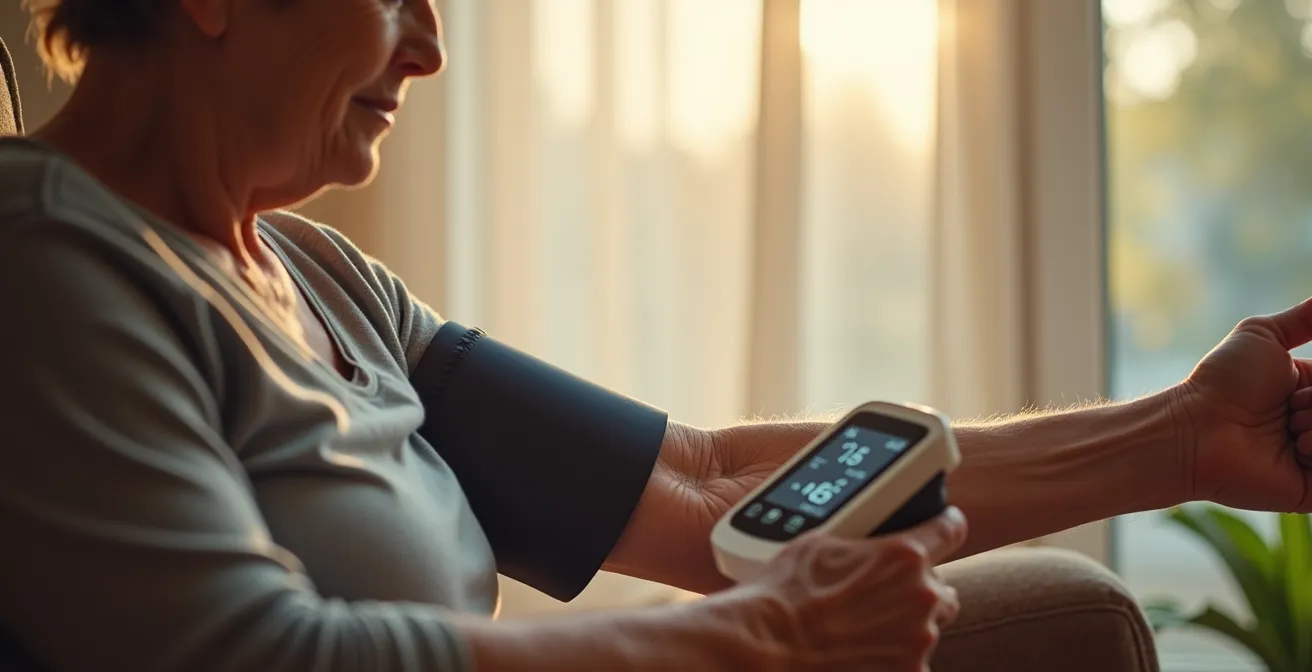
Home blood pressure readings are often dismissed by doctors because they are perceived as unreliable. This guide provides the clinical-grade protocol to change that.
- The accuracy of your data depends more on your technique (correct cuff, arm position) than on the device itself.
- Tracking slow, consistent changes (drift) in your readings is more clinically significant than reacting to a single, isolated spike.
Recommendation: Master the monitoring protocol detailed here to transform your daily readings from a simple log into a powerful, trusted tool for managing your health in partnership with your doctor.
As a cardiac nurse, I see the anxiety in the eyes of my patients and their caregivers every day. You’ve been told to monitor your blood pressure at home, but what does that truly mean? You diligently take readings, write them down, and bring them to your appointment, only to feel a sense of deflation when the doctor seems to rely more on their single, in-office measurement. The common advice is to “buy a monitor and track your numbers,” but this misses the most critical point. The goal isn’t just to collect numbers; it’s to generate clinically reliable data that your healthcare team can trust and act upon.
The disconnect often stems from a lack of protocol. In a hospital, we follow a strict procedure to eliminate variables that can skew a reading. At home, without that training, it’s easy to introduce errors that make the data questionable. This guide is designed to bridge that gap. We will move beyond the superficial advice and delve into the clinical methodology of home monitoring. The key isn’t in having the most expensive device, but in mastering a consistent process. We will explore why the details—like your posture, the time of day, and even the size of your cuff—matter more than you think.
This is about transforming your monitoring from a passive chore into an active, powerful part of your health management. By learning to produce data with clinical integrity, you empower yourself and provide your doctor with the insights needed to make the best treatment decisions for you. This protocol is your path to turning home readings into your most valuable health asset.
This article will walk you through the precise steps to ensure your home monitoring is as accurate and useful as a clinical measurement. We will cover everything from choosing the right equipment to interpreting the patterns in your data, giving you the confidence that your efforts are making a real difference.
Summary: Mastering Home Vital Sign Monitoring for Hypertension
- Wrist vs Arm Monitors: Which Provides Medical-Grade Accuracy at Home?
- How to Take Blood Pressure Correctly: The Arm Position Mistake Everyone Makes
- White Coat Syndrome: Why Your Doctor’s Readings Are Higher Than Your Home Ones?
- Ignoring the Drift: Why Small Daily Increases Matter More Than One Spike?
- Logging for the Doctor: Paper Logs vs App Syncing for Clinical Review
- Why Your Home Blood Pressure Cuff Might Be Giving You False Anxiety?
- Why Monitoring Weight Daily Detects Fluid Buildup Before Breathlessness Starts?
- Remote Patient Monitoring: How Does It Reduce Hospital Readmission Rates for Heart Failure?
Wrist vs Arm Monitors: Which Provides Medical-Grade Accuracy at Home?
The first step in generating reliable data is selecting the right tool. While wrist monitors are marketed for their convenience, they are not the clinical standard for a critical reason. The arteries in the wrist are narrower and not as deep as the brachial artery in the upper arm, which can lead to less accurate and more variable readings. Furthermore, precise positioning of a wrist monitor at heart level is difficult to maintain consistently, introducing another source of error. For these reasons, you will not find wrist monitors used for diagnostic purposes in a clinical setting.
For medical-grade accuracy at home, the choice is clear. According to the American Heart Association, automatic, cuff-style, upper-arm monitors are the recommended standard for non-professional use. These devices measure pressure at the brachial artery, the same site used by your doctor, providing a more consistent and comparable reading. The key is to ensure the device has been clinically validated for accuracy. To do this, you can consult online resources that list validated monitors.
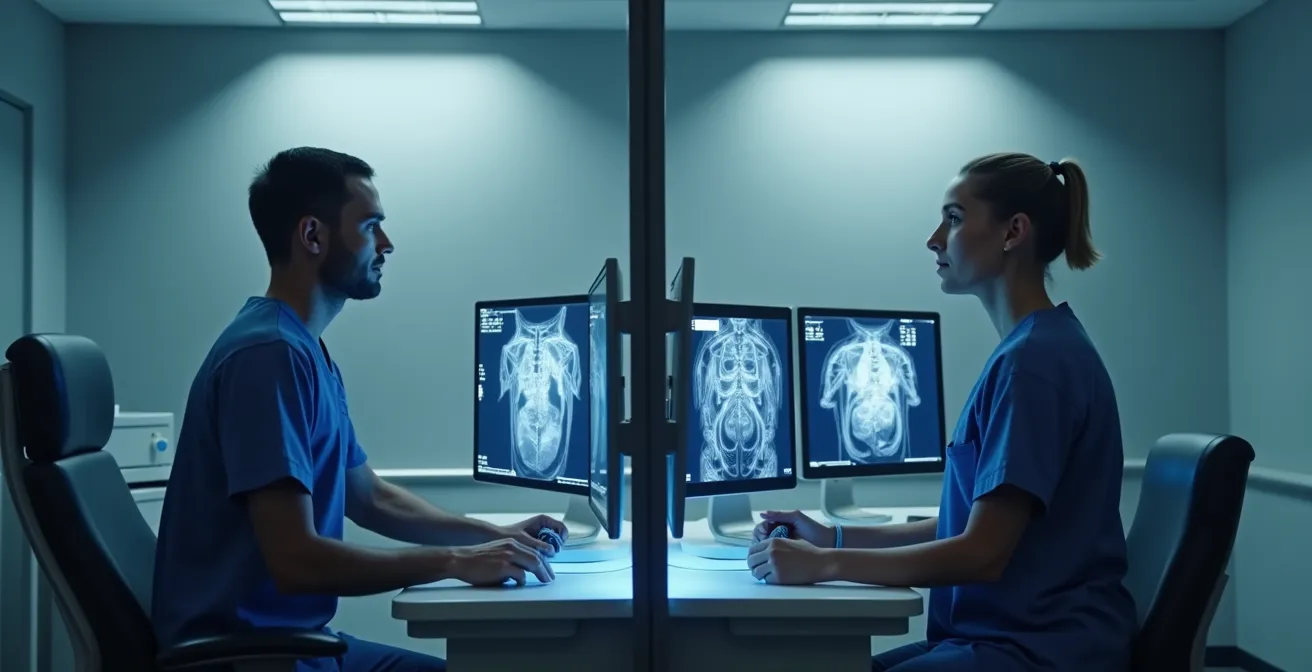
The image below illustrates the proper placement for both types of monitors, highlighting the upper arm as the preferred site for achieving clinical accuracy.
Ultimately, investing in a validated, upper-arm monitor is the foundational step. Before using a new device, it is best practice to take it to your next doctor’s appointment. There, you can take a reading alongside their equipment to verify that your monitor’s results are consistent with the calibrated, clinical-grade device used in the office. This simple validation step builds confidence in every reading you take thereafter.
How to Take Blood Pressure Correctly: The Arm Position Mistake Everyone Makes
The single most common error in home blood pressure monitoring is improper arm positioning. Many people rest their arm in their lap or let it hang by their side during a reading. This simple mistake can significantly alter the results because of gravity. If your arm is below heart level, the reading can be artificially high; if it’s too high, the reading can be artificially low. The goal is to eliminate this variable entirely.
The correct protocol requires you to be seated comfortably in a chair with your back supported and feet flat on the floor. Your arm, with the cuff correctly applied, should be supported on a flat surface, like a table, with your upper arm at the level of your heart. This means the middle of the cuff is roughly in line with your sternum. You should remain still and silent during the measurement. It’s also crucial to avoid talking, checking your phone, or watching television, as these activities can raise your blood pressure.
This isn’t just a minor detail; it’s a matter of clinical accuracy. Research shows that seemingly small deviations in posture can have a measurable impact. For instance, failing to support your back and feet properly can inflate readings by 5-10 mmHg. By consistently following a strict protocol—sitting for five minutes in a relaxed state before the first measurement and maintaining the correct posture—you ensure that the numbers on the screen reflect your body’s true state, not the circumstances of the measurement.
White Coat Syndrome: Why Your Doctor’s Readings Are Higher Than Your Home Ones?
It’s a common and frustrating experience: your blood pressure readings are perfect at home, but they spike the moment you’re in the doctor’s office. This phenomenon is known as “White Coat Syndrome” or white coat hypertension. It’s an anxiety-induced, temporary increase in blood pressure that occurs in a medical setting. This is precisely why consistent, properly-conducted home monitoring is so valuable—it provides a more accurate picture of your blood pressure in your normal environment, free from the stress of a clinical visit.
Despite its importance, home monitoring is not as widespread as it should be. A Michigan Medicine study found that only 48% of people aged 50-80 on blood pressure medications regularly monitor their levels at home. This highlights a significant gap in care, as home readings are essential for diagnosing white coat syndrome and preventing the over-prescription of medication. If a doctor only sees high readings in the office, they may increase medication unnecessarily, leading to potential side effects like dizziness or falls from low blood pressure (hypotension) at home.
To provide your doctor with the data they need, follow a structured protocol. They will likely recommend a 7-day monitoring diary before your appointment. This involves:
- Taking your blood pressure twice daily (morning and evening), at the same times each day.
- Recording all readings with the date and time.
- Noting the timing of your medications relative to the measurements.
- Bringing the complete log to your appointment for review.
This log allows your doctor to see the full picture, compare your home averages to the in-office reading, and make a more informed clinical decision.
Ignoring the Drift: Why Small Daily Increases Matter More Than One Spike?
In home monitoring, it’s easy to fixate on a single high reading, or a “spike.” A stressful phone call, a salty meal, or pain can all cause a temporary, sharp increase in blood pressure. While a sudden spike to very high levels (e.g., over 180/120 mmHg) requires immediate attention, the more subtle and often more significant pattern to watch for is “data drift.” This refers to a slow, consistent, upward trend in your average readings over days or weeks.
A gradual drift is a red flag that your current treatment plan may be losing its effectiveness or that an underlying physiological change is occurring, such as increasing arterial stiffness. This is the kind of insight that home monitoring is uniquely positioned to reveal. A single in-office reading every few months will likely miss this subtle but critical trend. As a clinical guideline, an upward drift of more than 5-10 mmHg in your average readings over one week warrants a non-urgent call to your doctor’s office to discuss the pattern.
The table below clarifies the distinction between these patterns and the appropriate response for each. Understanding this difference is key to reacting appropriately and avoiding unnecessary anxiety.
| Pattern Type | Characteristics | Typical Cause | Action Required |
|---|---|---|---|
| Gradual Drift | 5+ mmHg increase over 1-2 weeks | Medication losing efficacy, arterial stiffness | Schedule non-urgent doctor call |
| Sudden Spike | Single reading >180/120 | Pain, stress, salt-heavy meal | If with symptoms: Call 911 |
| Normal Variation | ±5 mmHg daily changes | Normal physiological variation | Continue monitoring |
By shifting your focus from isolated numbers to overarching trends, you adopt the mindset of a clinical observer. You are no longer just collecting data points; you are identifying actionable patterns that provide real value to your healthcare team.
Logging for the Doctor: Paper Logs vs App Syncing for Clinical Review
Once you’ve mastered the technique of taking accurate readings, the next step is to record them in a way that is clear and useful for your doctor. For decades, the standard has been a simple paper logbook. This method is straightforward, requires no technology, and is preferred by many seniors. A well-kept paper log should include columns for date, time, systolic, diastolic, and pulse readings, along with a space for notes on symptoms or unusual circumstances.
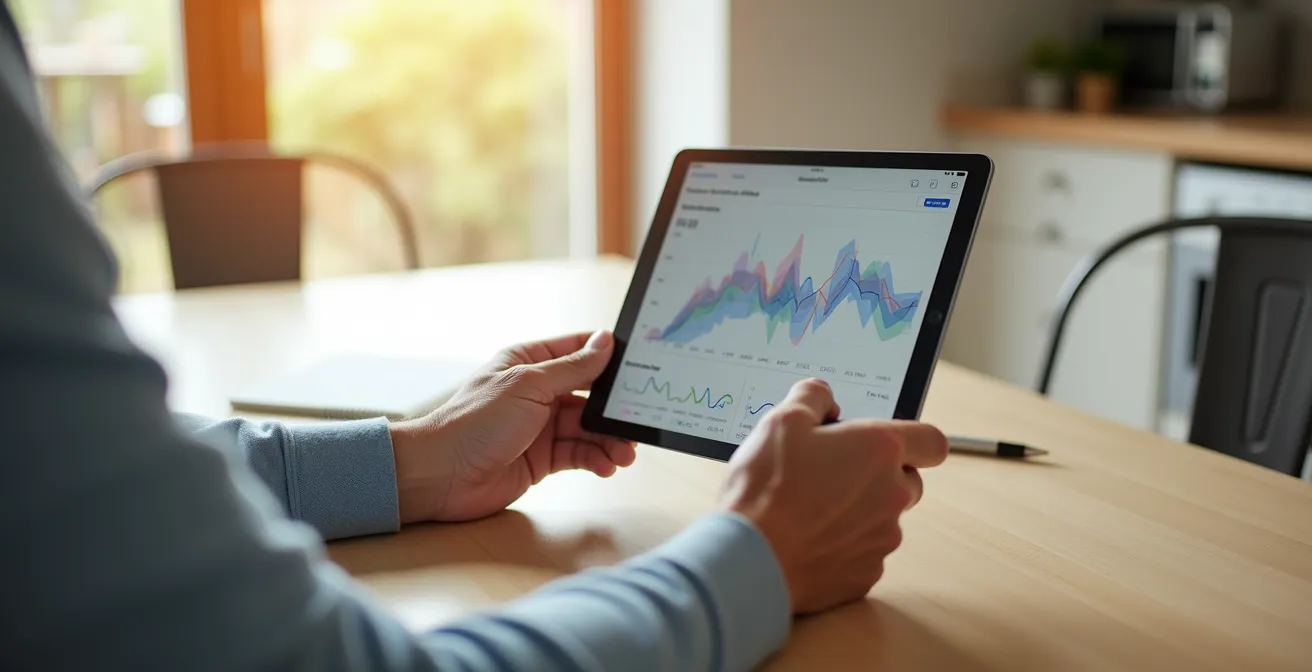
However, technology offers powerful alternatives. Modern blood pressure monitors can sync via Bluetooth to a smartphone or tablet app. These apps automatically log every reading, eliminating the risk of transcription errors. More importantly, they excel at visualizing data, instantly generating graphs and charts that make it easy to spot the “data drift” we discussed earlier. This visual representation of trends can be far more impactful for a doctor to review than a long list of numbers.
This image shows how a tablet app can present blood pressure trends over time, a feature that makes digital logging particularly powerful for clinical review.
If you opt for a digital solution, look for an app with senior-friendly features. Essential characteristics include a large, high-contrast display, simple one-button syncing, and the ability to export or share the data as a PDF. This last feature is crucial, as it allows you to print the report before your visit or email it directly to the clinic, bridging the gap between your home technology and the doctor’s workflow.
Why Your Home Blood Pressure Cuff Might Be Giving You False Anxiety?
You are following the protocol perfectly—your arm is at heart level, you’re relaxed, and you’re using a validated upper-arm monitor. Yet, your readings are consistently high, causing significant anxiety. Before assuming the worst, you must check one of the most overlooked sources of error: an improperly sized cuff. A cuff that is too small for your arm’s circumference will compress the artery unevenly, leading to artificially high blood pressure readings.
The impact of this is not trivial. In fact, American Heart Association research reveals that up to 39% of individuals could have falsely high readings simply because they are using a cuff that is too small. A 2023 Johns Hopkins study of 195 adults further quantified this, finding that when participants who needed an extra-large cuff used a regular-sized one instead, their systolic pressure was found to be 19.5 mmHg higher on average. A difference of that magnitude could easily lead to an incorrect diagnosis of hypertension or an unnecessary increase in medication.
To ensure you have the correct size, use a soft measuring tape to measure the circumference of your bare upper arm, midway between your shoulder and elbow. Compare this measurement to the sizing guide printed on the cuff or its packaging. Most standard adult cuffs fit an arm circumference of 9 to 13 inches (22-33 cm), but large and extra-large sizes are widely available. If you are near the edge of a size range, it’s generally better to choose the larger size. This simple check can eliminate a major source of error and provide peace of mind that your readings are truly accurate.
Key Takeaways
- Use a validated, upper-arm blood pressure monitor with the correctly sized cuff for your arm circumference.
- Follow a strict protocol for every measurement: sit quietly for 5 minutes, with your back supported, feet flat, and arm resting at heart level.
- Focus on tracking the trend (a slow “drift”) over weeks, rather than reacting to a single high “spike.”
Why Monitoring Weight Daily Detects Fluid Buildup Before Breathlessness Starts?
For individuals with hypertension, especially those with or at risk for heart failure, blood pressure is not the only vital sign to monitor daily. Your weight is a critical and highly sensitive indicator of your body’s fluid balance. The heart’s job is to pump blood effectively throughout the body. When it weakens, it can’t pump efficiently, causing fluid to back up in the body—a condition known as fluid retention or edema. This extra fluid results in a rapid increase in body weight.
This weight gain is often the very first sign of worsening heart failure, appearing long before more alarming symptoms like shortness of breath, coughing, or visible swelling in the legs and ankles. By tracking your weight daily, you can catch this fluid buildup at its earliest stage, allowing your doctor to intervene by adjusting your diuretic (“water pill”) medication before the condition progresses to a point requiring hospitalization. It is a simple, non-invasive, yet profoundly effective proactive measure.
As the Heart Failure Management Team at Frontier Senior Living Health Blog aptly puts it:
Daily weight checks spot the bucket getting fuller, long before it overflows.
– Heart Failure Management Team, Frontier Senior Living Health Blog
This early detection is the core principle of daily weight monitoring. By catching the “bucket” as it starts to fill, you prevent the “overflow” that leads to respiratory distress and emergency room visits.
Your Action Plan: The Daily Weight Monitoring Protocol
- Weigh yourself every morning at the same time, immediately after using the toilet and before eating.
- Wear similar clothing (or no clothing) for each measurement to ensure consistency.
- Use the same scale each day and record the weight in your logbook alongside your blood pressure.
- Alert your doctor if you gain more than 2-3 pounds (about 1-1.5 kg) in 24 hours.
- Call your doctor’s office immediately if you gain more than 5 pounds (about 2.5 kg) in one week.
Remote Patient Monitoring: How Does It Reduce Hospital Readmission Rates for Heart Failure?
The principles of diligent home monitoring—tracking blood pressure and weight, identifying trends, and communicating with your doctor—form the foundation of modern chronic disease management. Remote Patient Monitoring (RPM) is the next evolution of this partnership. RPM uses technology to automatically transmit the data from your home devices, like a blood pressure monitor or a digital scale, directly to your healthcare team in near real-time.
This creates a continuous feedback loop. Instead of reviewing your logbook every few months, a nurse or clinical team can review your daily vital signs on a dashboard. This allows them to spot a negative trend, like a gradual “drift” in blood pressure or a sudden gain in weight, on the day it happens. They can then intervene proactively, perhaps with a phone call to adjust medication, long before the issue escalates into a full-blown medical crisis requiring a hospital visit. This proactive approach is a key reason why RPM has been shown to significantly reduce hospital readmission rates, particularly for conditions like heart failure.
Case Study: The AARP and Johns Hopkins MyHealthNetwork Initiative
In a partnership to improve senior health, AARP and Johns Hopkins developed MyHealthNetwork, an RPM platform designed for older adults. The system focused on a “Data-to-Intervention” loop, where clinical teams reviewed daily data to spot trends and act on them. A key finding from early results was a significant reduction in anxiety among participants. Knowing that a professional was monitoring their readings gave them peace of mind, which in turn led to better adherence to their monitoring and treatment plans, resulting in fewer emergency visits.
Ultimately, whether through a paper log, a standalone app, or a comprehensive RPM system, the goal remains the same: to create a strong, data-driven partnership between you and your healthcare provider. This consistent, reliable flow of information is what turns daily monitoring from a simple task into a life-saving strategy, giving you more control over your health and more healthy days at home.
Start implementing this clinical-grade monitoring protocol today. By treating each measurement with precision and focusing on trends, you transform your role from a passive patient to an active, informed partner in your own healthcare.